
 KRAH GROUP
A resistor installed on a machine or system needs replacing, but the original model is no longer available. The manufacturer no longer makes it, lead times are incompatible with the company’s needs, or an alternative has to be found.
In these cases, it is not always necessary to find exactly the same component.
An equivalent resistor can be assessed or a custom solution developed, provided the electrical, thermal and mechanical characteristics required by the application are correctly reconstructed.
Where to start? Here is the information to gather, in five steps.
Why finding a resistor with the same ohmic value isn’t enough
The resistance value is the first figure to check, but on its own it doesn’t tell you whether two resistors are interchangeable.
Two components with the same resistance can in fact have very different characteristics in terms of:
Identify the resistor’s function
Before even looking for an equivalent, it’s important to understand what the component is for.
The resistor could be used, for example, for:
Knowing the application makes it possible to understand which characteristics are really decisive in choosing the new component.
If available, it can also be useful to retrieve the documentation for the machine or system in which the resistor is installed.
Retrieve the data of the existing component
The simplest starting point is the resistor’s nameplate.
Depending on the component, information such as the following may be available:
It is also useful to retrieve any datasheets, wiring diagrams, technical drawings or original machine documentation.
The more information is available, the easier it will be to reconstruct the characteristics required of the new resistor.

Check power and duty cycle
An equivalent resistor must be able to handle not only the required resistance value, but also the energy it will have to dissipate during operation.
It is therefore necessary to know, where possible:
- required power;
- continuous or intermittent operation;
- duration of any peaks;
- cycle frequency;
- time available for cooling.
This is particularly important in applications where the resistor is subjected to high loads for short periods.
Check dimensions, fixings and connections
When the new resistor has to be installed on an existing machine, mechanical compatibility also becomes important.
You therefore need to check:
- ✓maximum available dimensions
- ✓centre distances and fixing points
- ✓installation position
- ✓type and position of the terminals
- ✓space needed for ventilation and heat dissipation
- ✓any constraints related to the panel or machine structure
The replacement component doesn’t always have to be exactly the same shape as the original, but it must be possible to integrate it correctly and safely into the existing system.
Consider the environment it works in
Environmental conditions must also be taken into account.
A resistor installed inside an electrical panel works in different conditions from a component exposed outdoors, to high temperatures, humidity, dust or aggressive atmospheres.
When looking for an equivalent, it is therefore useful to know:
The replacement solution must be suited not only to the electrical characteristics of the system, but also to the real conditions of use.
What if I don’t have the original datasheet?
This is far from unusual, especially when working on older machinery or discontinued components.
The lack of original documentation doesn’t necessarily mean a solution can’t be found.
In this case, the following can be useful:
- photos of the resistor;
- photos of the nameplate;
- component dimensions;
- the machine’s wiring diagram;
- information about the application;
- data on the motor, drive or connected system;
- any codes or references that are still legible.
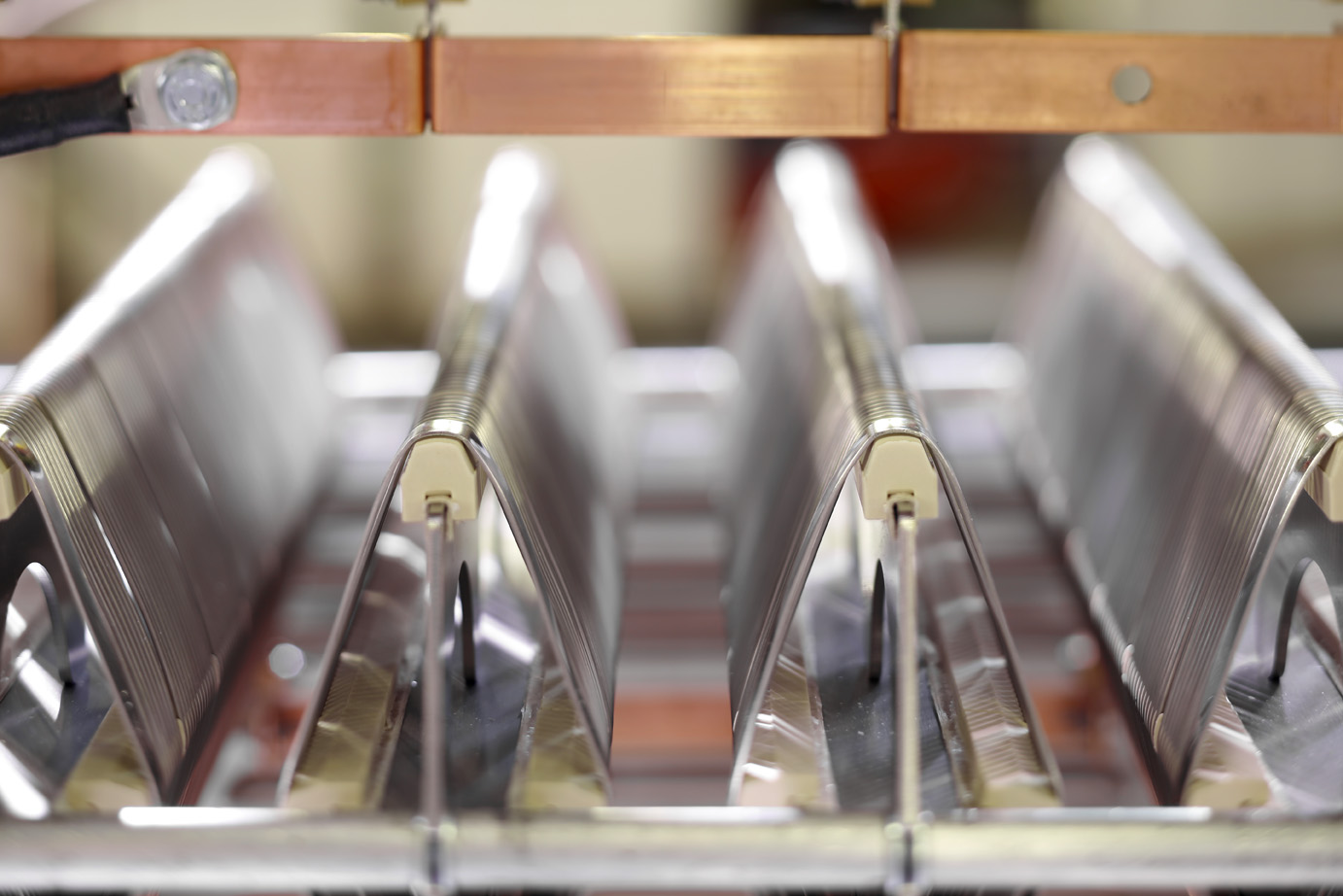
Starting from the available data, it is possible to assess what further information is needed to define the characteristics of the replacement component.
Can a custom equivalent resistor be made?
When a model is no longer available or a standard component doesn’t meet the application’s requirements, manufacturing a custom resistor can be considered.
The aim is not to reproduce the old component in every detail, but to obtain a solution that meets the application’s electrical, thermal, mechanical and environmental requirements — a combination of variables that is hard to assess with certainty from the nameplate or a generic datasheet alone.
This makes it possible to act even when the original resistor is obsolete, hard to source or has special specifications.

What to send to request an equivalent resistor
To replace an industrial resistor, you can start from what is already available. In particular, the following are useful:
Photos
- full photo of the resistor;
- close-up photo of the nameplate.
Technical data
- make and model, if legible;
- ohmic value;
- power and other available electrical data;
- dimensions and fixing system;
- datasheet or wiring diagram, if available.
Application
- information about the machine or application;
- operating conditions.